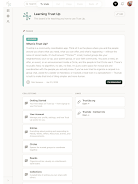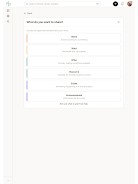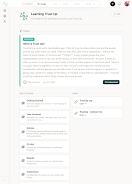
Trust Up is an app designed to help neighborhoods, workplaces, clubs, and other preexisting groups coordinate sharing and mutual support without exposing members to strangers or opaque algorithms. Trust Up connects only people who already belong to the same circles so members can post needs, offers, and collaborative requests directly to the people they already know. The app emphasizes practical day-to-day coordination: organizing carpools, arranging childcare swaps, sharing tools, running mutual aid projects, or exchanging professional resources among colleagues and classmates.
Key features
The interface centers on simple posting and clear terms: when someone creates a listing they describe the item or request, select the circle(s) to receive it, and set the conditions for the exchange. These conditions can include time, location, expected compensation or whether an item is a gift, and basic pickup or delivery instructions. Visibility is limited to the circles you select, so notices are seen only by neighbors, coworkers, co‑op members, or other trusted groups. Group coordinators can create and manage circles, approve new members, and adjust membership rules to keep participation aligned with community expectations.
How it works
Posting and responding use straightforward controls: tap to create a post, attach a brief description and an optional photo, choose the circle or circles, and set the exchange terms. Responses are recorded as a confirmation workflow so participants can see whether a proposal is pending, accepted, or completed, helping reduce misunderstandings. Members can also update a post with new details or mark an exchange closed. Notifications keep relevant circle members informed, and in-app messaging scoped to the circle helps arrange logistics without exposing personal contact details outside the group.
User experience, progression and customization
The visual design favors clarity over bells and whistles: a clean feed sorted by recency with filters to view only offers, only requests, or specific categories such as childcare, tools, or rides. Users progress naturally by contributing: as people participate in exchanges they build a visible history of completed transactions and confirmations within their circles, which helps others assess fit for future coordination. Customizable settings let groups define common tags, set default terms, or pin recurring resources so frequently shared items and scheduled shifts are easier to find. Personal profiles are minimal and focused on practical details like availability and preferred pickup times rather than extensive public profiles.
Accessibility, offline use and device controls
Trust Up is built to be usable on a range of devices and to support common accessibility needs: adjustable text sizes, high‑contrast display options, and compatibility with screen readers make it easier for diverse community members to participate. The app caches recent posts and your circles so you can view important information without a continuous connection; creating or updating posts requires connectivity but drafts are saved locally until you go online. Controls are optimized for single‑handed operation and clear affordances reduce accidental actions, with confirmation steps for irreversible changes like removing members or deleting posts.
Privacy, moderation and limitations
Privacy is a core design principle: membership controls keep circles closed to people you do not invite, and data sharing is minimized to what’s necessary for coordination. Circle administrators can set moderation rules and remove posts that don’t comply with community standards; Trust Up does not surface listings beyond the groups you choose. That focus comes with tradeoffs: because exposure is limited to existing circles, listings may reach fewer people than on public marketplaces, and smaller groups may have less variety available. Successful use relies on active participation and clear communication among members rather than algorithmic matchmaking.
Practical use cases and replay value
Communities use Trust Up for recurring and one‑off needs alike. Parents coordinate school carpools and babysitting swaps, neighbors schedule shared lawn‑mower rotations, co‑ops manage lendable equipment, and professional networks arrange short‑term resource loans or skill swaps. The app stays useful over time because posts reflect ongoing local needs and resources; regular contributors find it becomes a central organizational layer for everyday community logistics rather than a temporary bulletin board.