CarX Street puts you behind the wheel of a high-octane open-world street racer where realistic handling, drifting technique, and part-by-part tuning come together on a sprawling urban map. In CarX Street you explore highway stretches and dense city districts, take part in career events with club-style rivals and boss battles, and build a collection of vehicles that reflect both visual taste and mechanical setup. The description below explains the gameplay systems, customization depth, and what to expect from long-term progression so you can decide if this driving experience matches your preferences.
Gameplay and driving mechanics
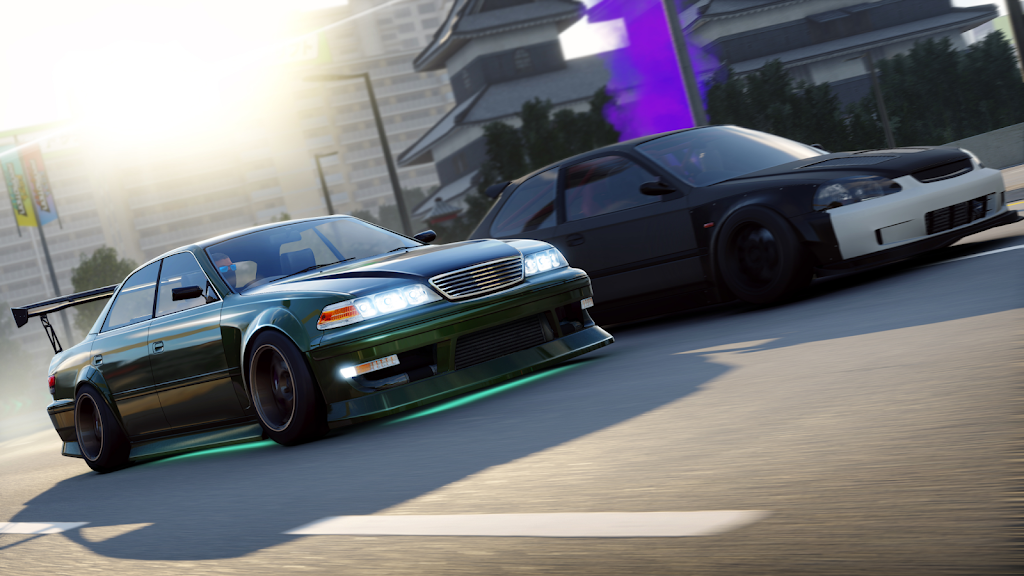
The core gameplay emphasizes physics-driven behavior: weight transfer, traction, and aerodynamics affect how a car responds in turns, at top speed, and during drifts. Events vary from precision drift runs to high-speed highway sprints, requiring different setups and driving approaches. Instead of arcade simplifications, the game rewards players who learn braking points, throttle modulation, and line selection. Races take place across interconnected neighborhoods and open highways, with traffic and environmental factors that change how you approach each challenge.
Controls and accessibility
Controls are designed to be approachable while still offering depth. On-screen controls can be adjusted for sensitivity and layout so you can prioritize steering finesse, braking response, or camera placement. Steering assists and stability aids can be toggled or tuned to ease newcomers into the handling model, while experienced drivers can reduce assists for a more demanding, skill-based feel. The interface aims to make mechanical tuning readable by explaining how each part alters handling and performance.
Progression, career structure, and clubs
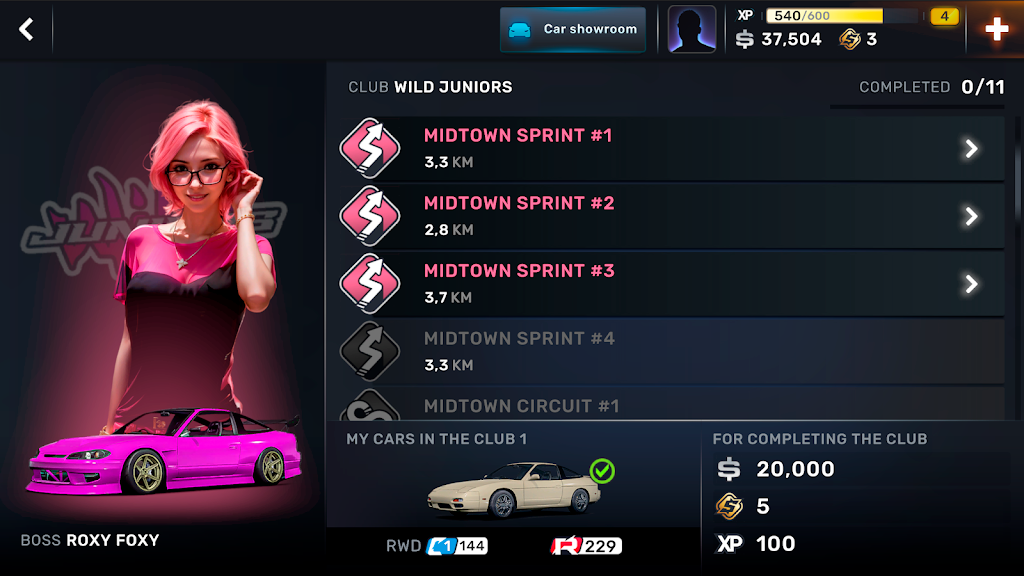
The career mode unfolds as a sequence of events and challenges that unlock new parts, cars, and residential garages where you store your fleet. Clubs act as thematic milestones—rival crews and boss opponents give structure to progression without implying online matchmaking. Completing club contracts and boss fights advances your reputation and access to rarer components. Progression is gradual, encouraging experimentation with setups rather than rushing to maxed-out builds, and the game provides visible metrics so you can compare how suspension, gearing, and power upgrades influence lap times and drift scores.
Customization: mechanical and visual
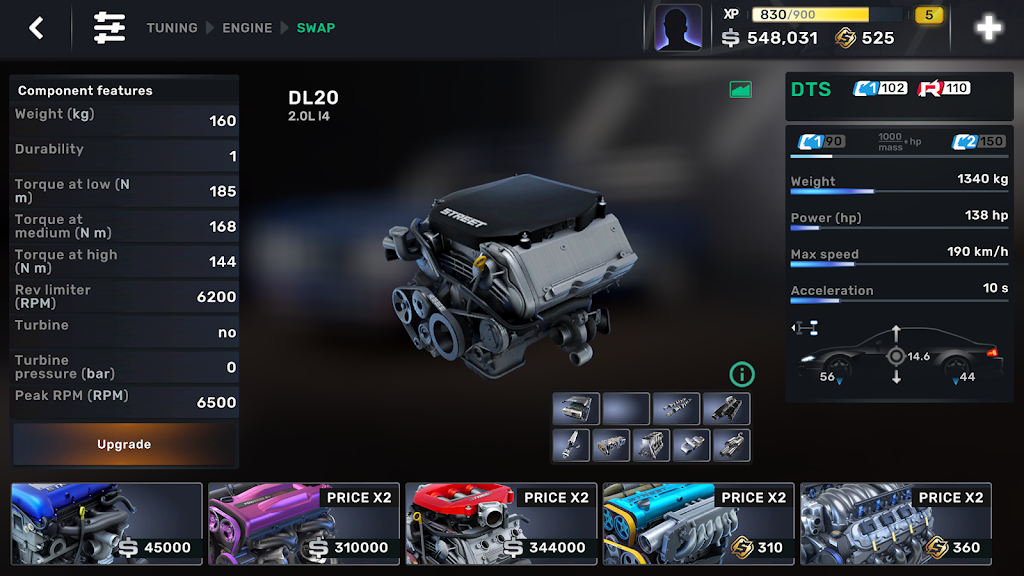
Customization in CarX Street is both cosmetic and technical. The part-by-part tuning system lets you modify engine internals, transmission ratios, suspension geometry, tires, and even swap engines to change power delivery. Each change has tangible effects on handling and acceleration, allowing players to craft cars tuned specifically for drift events or top-speed runs. Visual options cover bumpers, skirts, rims, lights, mirrors, and paintwork, letting you create a distinct street presence. Garages and vehicle collections are an important part of the experience, providing a space to compare builds and prepare different cars for particular event types.
Level design, environments, and day/night cycles
The in-world map combines open highways with tighter urban circuits, designed so that exploration and event selection feel natural. Dynamic day/night cycles and changing lighting conditions affect visibility and atmosphere, creating different driving moods and requiring minor adjustments to setup and strategy. In-world service points such as gas stations are placed around the map to reinforce the sense of a living cityscape and to provide convenient locations for preparing vehicles before an event.
Challenge systems and replay value
Replayability is supported by varied event types, part-level tuning possibilities, and a steep learning curve for mastering drift and high-speed techniques. Boss fights and club contracts introduce progressively tougher challenges that reward better setups and driver skill. Because small tuning changes can produce large behavioral differences, revisiting the same circuit with a new configuration often yields fresh experiences. The game also encourages experimentation by providing clear feedback on how parts and driving inputs influence performance.
User experience, offline play, and limitations
The user experience is focused on clarity: tooltips explain tuning effects, and the progression system paces access to advanced parts. A substantial portion of the gameplay, including career events and vehicle customization, can be enjoyed offline, making it suitable for play without a persistent connection. Be aware that the depth of the tuning system and the practice required to master drift mechanics create a steeper learning curve for casual players; long sessions may also demand regular breaks to maintain focused performance.