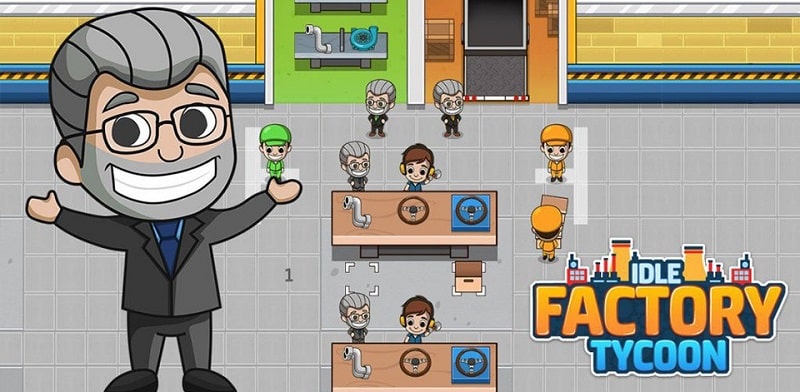
Idle Factory Tycoon gives you control of a growing manufacturing empire that keeps earning while you step away. In Idle Factory Tycoon you design production lines, staff automated managers, unlock progressively higher-value products and expand factory capacity to improve passive income. This editor-style introduction explains how the game balances simple touch controls with strategic decisions so you can plan long-term growth rather than rely on constant tapping.
Gameplay and Controls
The core gameplay focuses on building efficient chains that convert raw inputs into finished goods. You drag and place stations, tap to upgrade individual machines and use sliders or buttons to allocate temporary speed boosts. Managers can be assigned to lines to automate production and multiply output. Visual indicators draw attention to idle machines, blocked conveyors and bottlenecks so you can make targeted adjustments without opening dozens of menus. The control scheme is optimized for touch: drag to rearrange, long-press for detailed stats and single taps for quick upgrades, making the experience comfortable for short play sessions and longer planning stretches.
Progression and Upgrade Systems
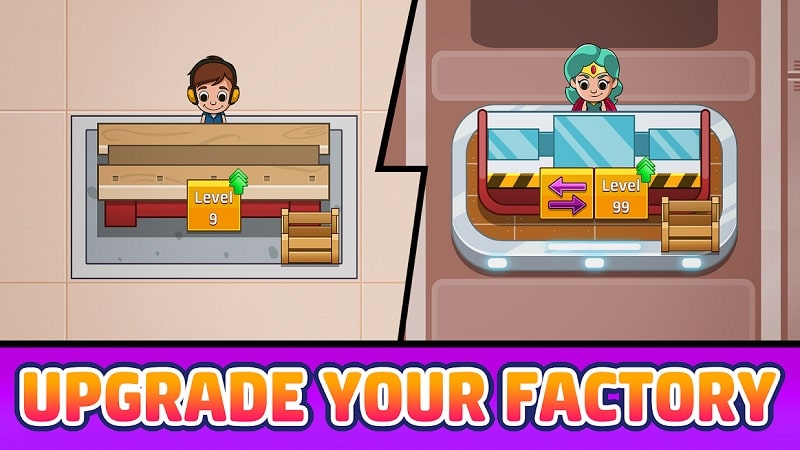
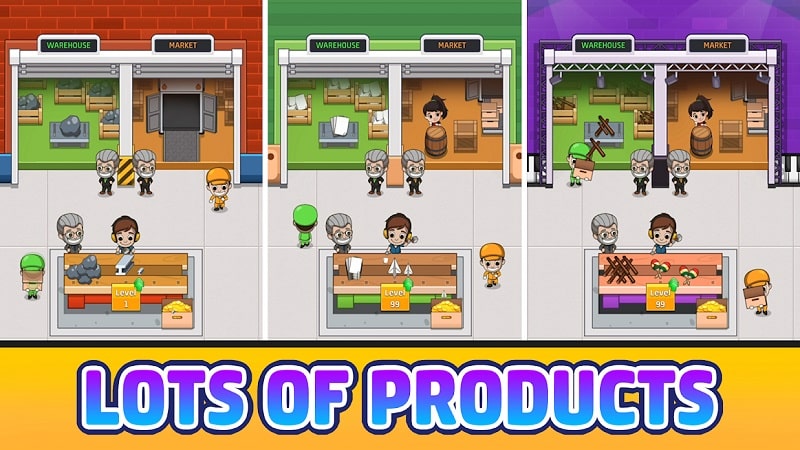
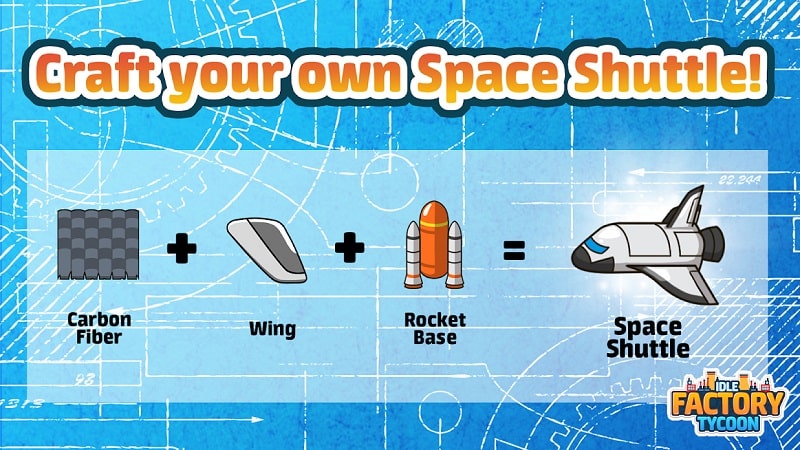
Progression happens through unlocking new product tiers and expanding active stations in each factory area. As you advance you’ll access higher-value product types that require more complex chains but return larger earnings per cycle. Each production station supports multiple upgrade levels to increase output, reduce cycle time and lower resource waste; managers provide multiplicative bonuses that change how a line performs under load. The game’s economy encourages decisions about when to reinvest in capacity, when to buy incremental speed upgrades and when to prioritize manager placement to maximize returns over time.
Factory Design and Strategy
Design is a strategic element rather than a purely cosmetic one: how you arrange stations and route production affects throughput and long-term profit. The choice to concentrate upgrades on a single high-value line or spread them across several smaller products creates meaningful trade-offs. Small changes in station order, upgrade sequencing or manager assignment can unlock better passive income without adding new hardware. Experimentation with layout and upgrade order rewards methodical play and can keep the late game engaging for players who enjoy optimization challenges.
Level Structure and Customization
Progress is organized into discrete factory areas that open as you reach new product tiers and meet capacity requirements. Each factory area supports up to 30 production stations, giving room to test different chains and specialization strategies. Visual customization options let you personalize production floors with themes and tailored looks for each area so progression feels distinct. Customizable visuals remain practical: icons and animations are designed to communicate machine status and upgrade effects clearly rather than obscure information behind decorative detail.
Visual Style and Performance
The presentation favors clarity and readability over photorealism, using clean icons, legible UI elements and animated machines that make it easy to understand what each upgrade or manager does at a glance. This approach keeps the UI usable when monitoring multiple lines and helps the game perform smoothly on a wide range of devices. Visual choices are intended to support decision-making, highlighting active production, queued outputs and areas where idle time is costing you earnings.
Offline Play and Accessibility
Offline progression is a core part of the experience: factories continue to produce and accumulate earnings while the app is closed, so you can return after hours or days to collect rewards. Accessibility features include scalable text, clear color contrasts and simple one-handed control options to make the interface approachable on different screen sizes. The game supports brief check-ins for casual players as well as deeper planning sessions for those who like to refine layouts and upgrade paths.
Challenge Systems, Replay Value and Player Experience
Challenges arise from managing the late-game economy as costs and upgrade complexity scale. Time-limited boosts and optional in-game purchases can accelerate progress for players who prefer a faster pace, but the central design still rewards efficient layouts and informed upgrade choices. Replay value comes from trying different product combinations, reworking station order and experimenting with manager placement to extract more passive income from the same station count. Overall, Idle Factory Tycoon offers a steady, information-driven idle experience where planning and optimization matter more than frantic input.
Considerations
For some players the late game can feel repetitive once major expansions are completed, and the simplified visual style is intentionally modest rather than visually extravagant. Optional boosts and store items can shorten grind for those who want them, so consider whether you prefer a gradual progression pace. The game’s emphasis is on clear mechanics, strategic layout choices and reliable offline earnings rather than real-time competition or complex micromanagement.