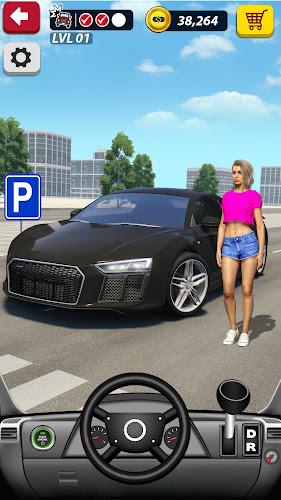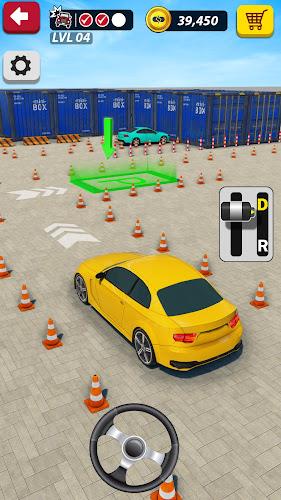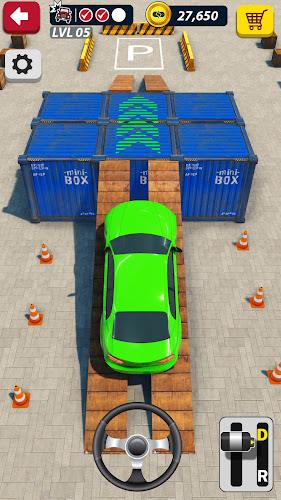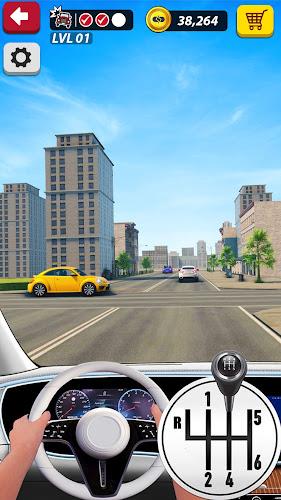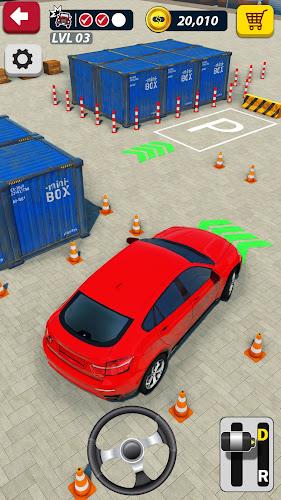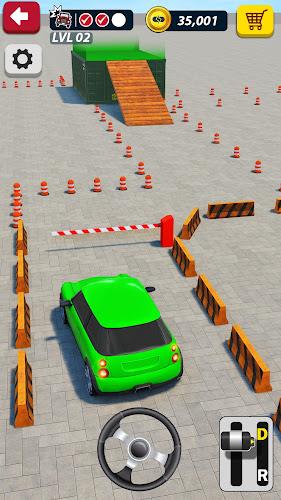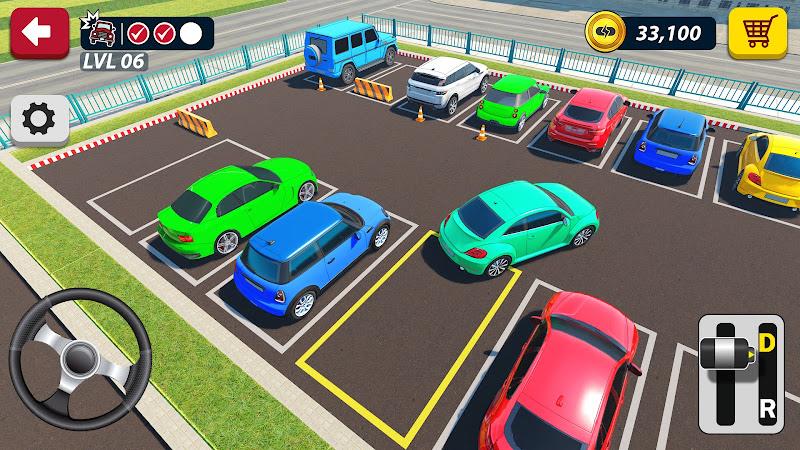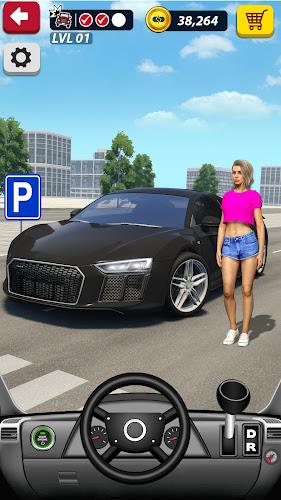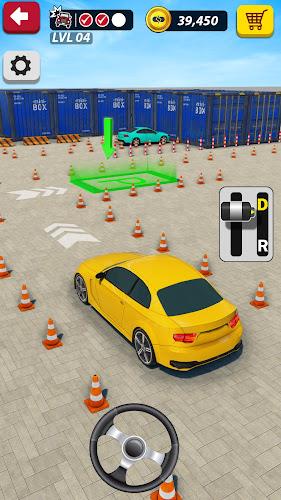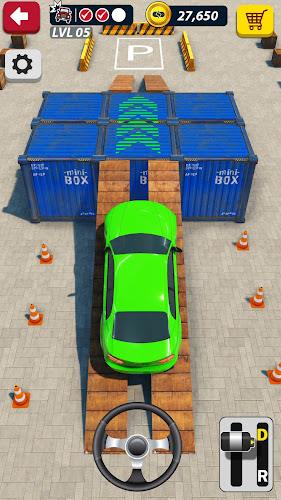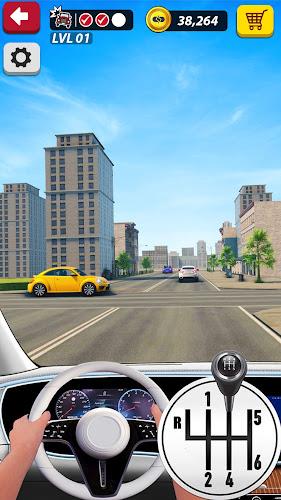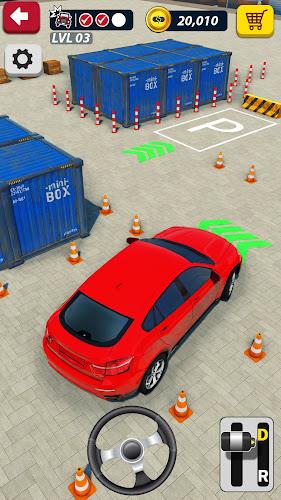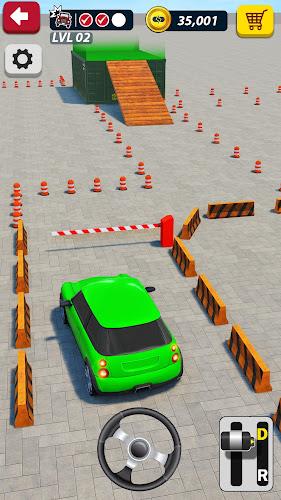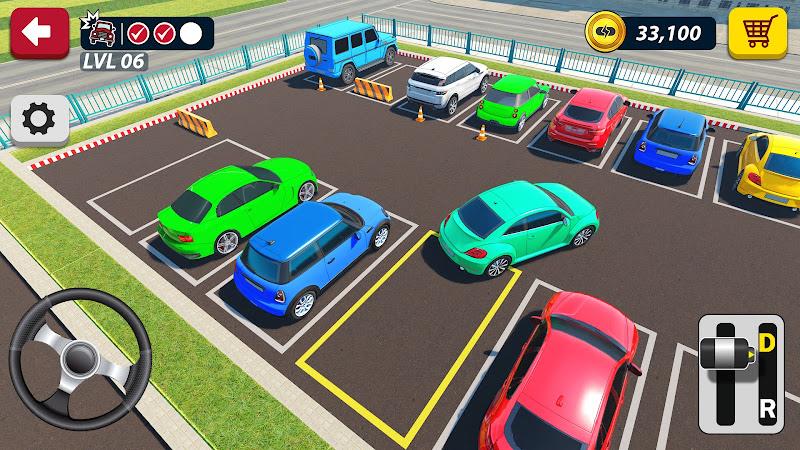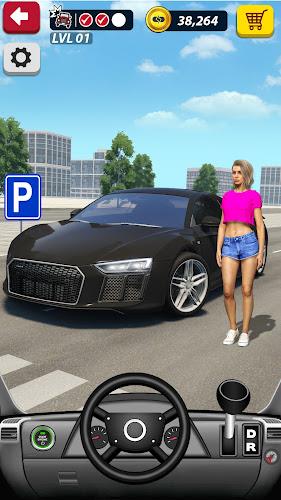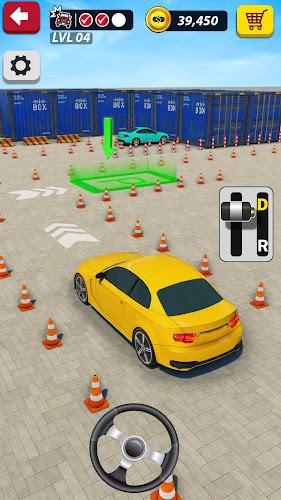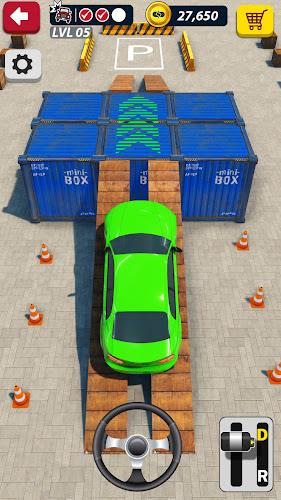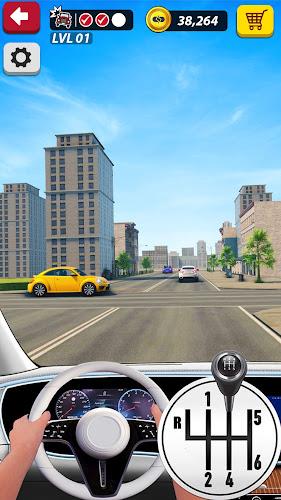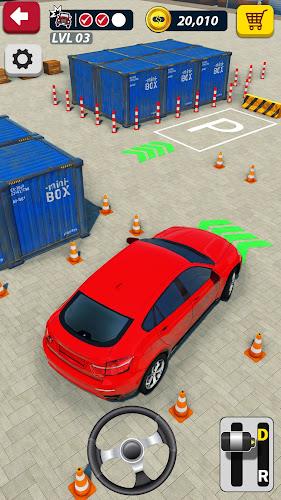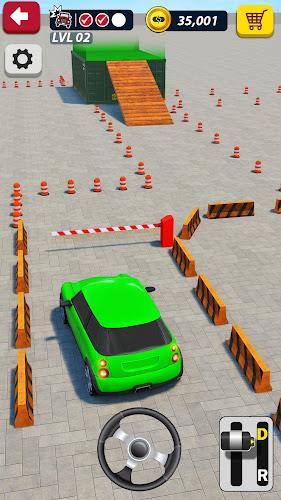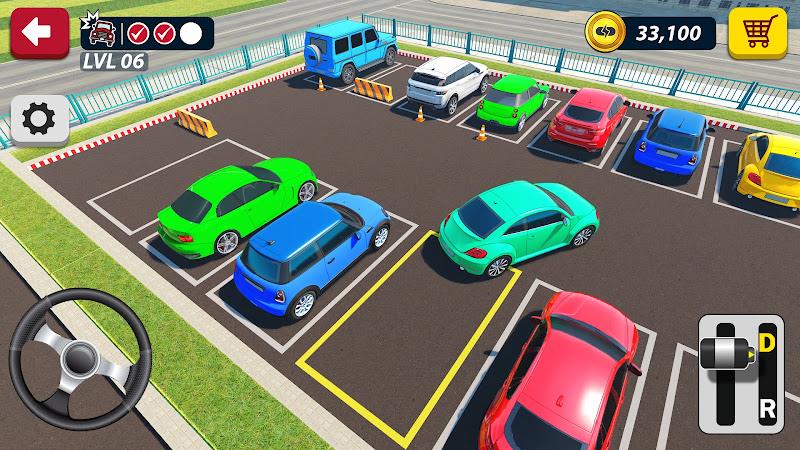
Steer & Park Car Challenge puts you behind the wheel in a focused city driving simulator designed to teach and refine core steering and parking skills. This hands-on practice app, Steer & Park Car Challenge, opens with compact exercises that resemble short driving lessons: clearly stated objectives, realistic urban layouts and traffic situations that emphasize precision rather than speed, so newcomers and returning players alike can immediately see what to practice and why.
Gameplay and level structure
The gameplay is organized around a staged progression that guides players from simple vehicle control into more technical parking tasks. Early stages concentrate on straight-line stability, low-speed steering corrections and basic entry into marked bays. Later levels introduce tighter clearances, angled stalls, parallel parking and sequences that combine multiple maneuvers. Each area is designed with measurable success conditions—alignment windows, time targets and allowed contact limits—so practice sessions can be short drills focused on one skill or extended runs that string several lessons together to simulate real urban situations.
Controls and accessibility
Controls are tuned to feel predictable and fair across a range of devices. Steering sensitivity can be adjusted to match a player’s natural input, with options for touch-drag steering, tap-and-hold turning and an optional on-screen wheel for players who prefer a physical-feel interface. Adjustable assistance levels let learners enable steering aids, brake stabilization and visual alignment guides, while experienced users can reduce or disable these aids to test their precision. Clear, repeatable checkpoints and simple restart flows keep frustration low and make it easy to iterate on a single maneuver until it improves.
Visual style and audio
The visual approach favors clarity over excessive detail so key spatial cues remain visible during close maneuvers. Streets are modeled with readable signage, consistent lighting and camera placements chosen to enhance depth perception for backing and alignment. Multiple camera angles allow players to switch between a broader driving view and tighter, low-angle perspectives tailored to precise parking tasks. Audio feedback uses realistic vehicle sounds and subtle environmental cues to reinforce actions: throttle and braking tones, parking sensors and ambient traffic help convey speed, contact events and spatial relationships without distracting from the exercise.
Progression and challenge systems
Progression is driven by measured performance rather than arbitrary levels. The game records concise metrics such as alignment accuracy, completion time and collision count, and these values determine advancement through the course. As players improve, challenges scale by narrowing available space, adding moving obstacles or introducing timed reverse entries that require planning and smooth control. The system encourages targeted practice: when a metric shows a recurring weakness, a specific drill can be replayed to sharpen that skill before moving on.
Vehicles and customization
The app includes a selection of vehicle types that affect handling and parking strategy. Compact cars, mid-size sedans and larger vehicles have distinct turning radii and blind-spot characteristics so players learn how vehicle size changes approach and input. Customization focuses on practical adjustments—camera angle, HUD clarity and sensitivity presets—rather than deep cosmetic options. These settings help players find a comfortable setup quickly and keep attention on developing technique rather than managing appearance.
Replay value, offline play and user experience
Steer & Park Car Challenge is suitable for both short practice bursts and longer, focused improvement sessions. Replayability comes from marginal gains: shaving fractions of a second from a run, improving alignment accuracy or reducing collisions all feel like real progress. The app is fully playable offline, so practice is available without a network connection, and menus emphasize quick access to exercises and clear explanations of errors so players understand what to fix on the next attempt. Together these choices create an experience intended for steady, measurable improvement in low-speed driving and parking skills while remaining approachable for a wide range of users.