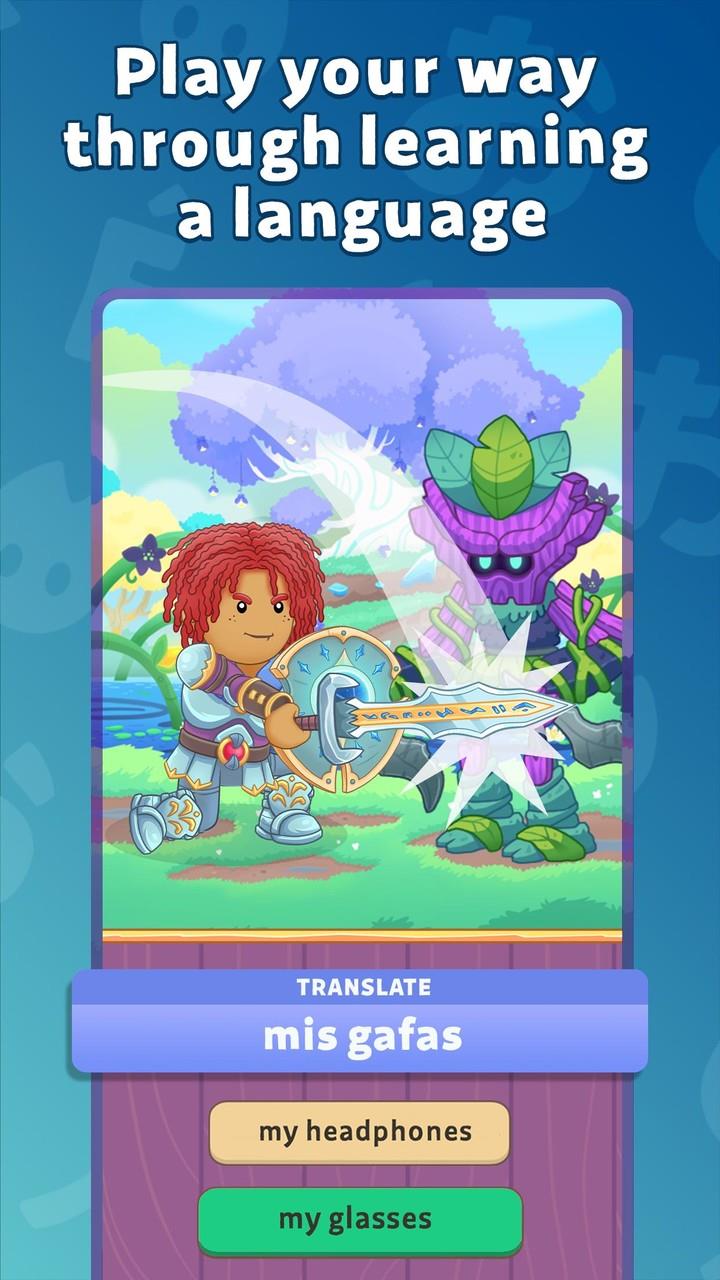
Lingo Legend turns language practice into a story-driven role-playing experience where learning vocabulary and phrases is tied to tactical card combat and exploratory quests. Lingo Legend places flashcard-style prompts into a combat loop: you draw ability cards from a personalized deck, respond to a prompt, and then execute moves that affect battles and the in-game world. The app is built for learners who prefer active, game-like study sessions and for travelers who want practical phrases delivered within a clear progression system.
Gameplay and Controls
The core gameplay blends spaced-repetition study with light tactical decisions. On each encounter you draw ability cards that represent question types, hints, or special actions; correctly answering a prompt triggers the associated effect in combat. Controls are optimized for touch devices: tap to select a card, swipe to confirm an answer or discard, and long-press to reveal optional hints or example sentences. Input supports multiple response formats including multiple-choice, typed input, and audio pronunciation practice when available for the chosen language. Combat encounters are short and designed to fit into brief study sessions while still encouraging strategic deck construction.
Progression and Learning Systems
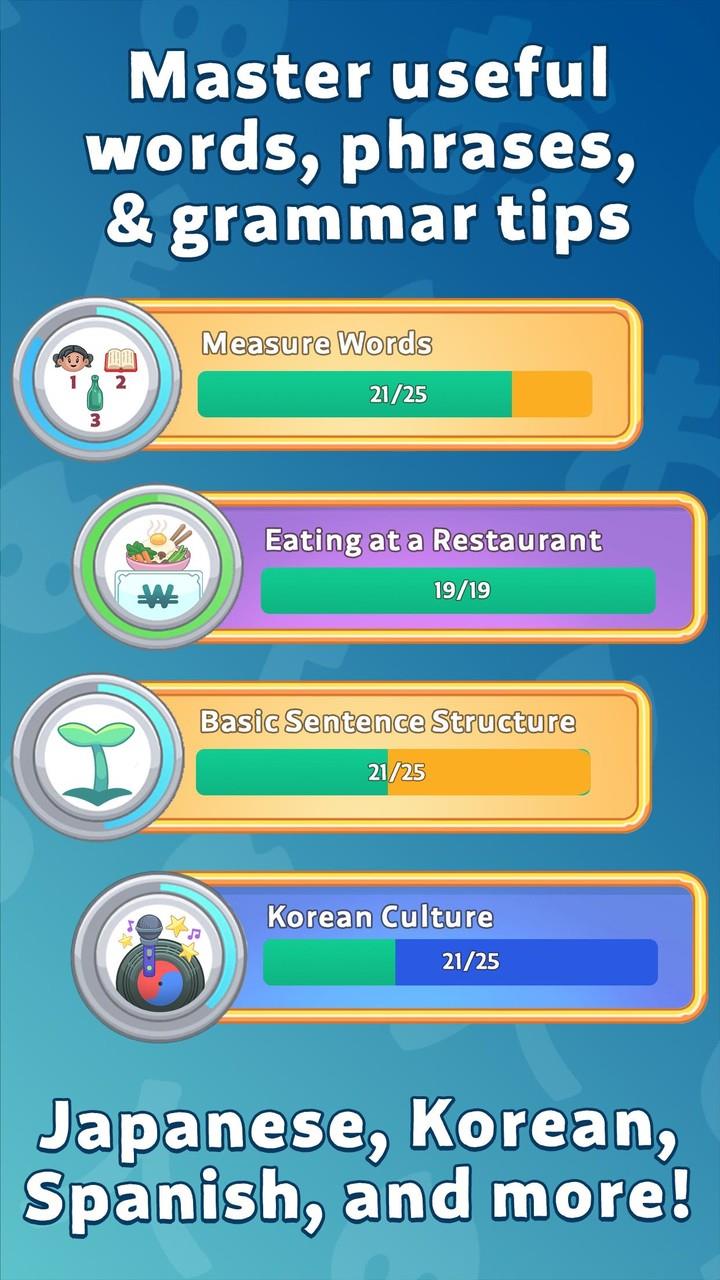
Progression is driven by experience points, category completion, and mastery levels for individual items. A spaced-repetition algorithm prioritizes review items based on past performance so you see difficult words more often and mastered items less frequently. As you level up your avatar, new map regions and category packs unlock, and completing themed sets increases the difficulty and variety of prompts. Achievements and milestone rewards grant crafting materials and card upgrades that improve your deck’s effectiveness in tougher encounters. The app keeps a clear learning record so you can track streaks, accuracy by category, and time spent practicing.
Visual Style and Level Structure
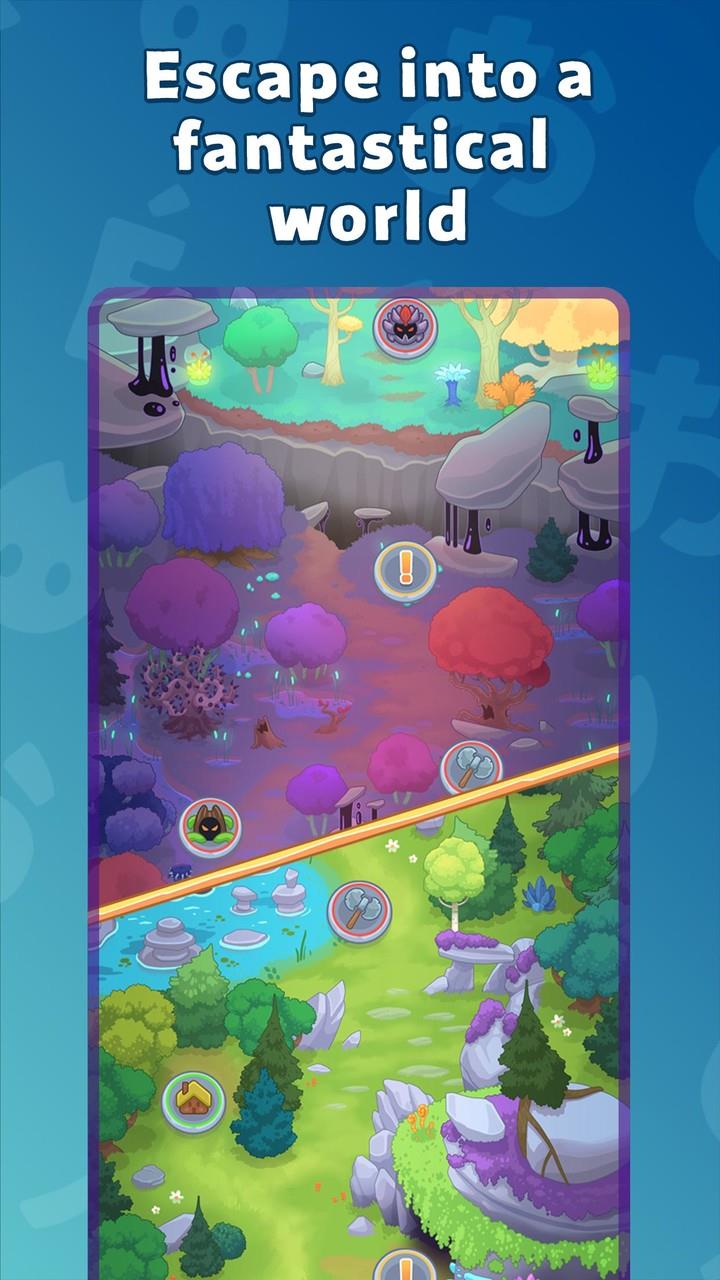
The visual presentation combines a fantasy map with card-based interfaces and hand-painted character art to create an inviting study environment without distracting from the learning tasks. The story map is arranged into chapters and nodes that represent lessons, side quests, and challenge encounters. Each node includes an objective and an estimated time-to-complete, helping learners plan study sessions. Visual cues and progress markers indicate which areas contain practical phrase sets such as ordering food, navigating transport, or basic conversation skills.
Customization, Crafting, and Deck Building
Customization ties cosmetic progression to learning progress rather than pay-to-win mechanics. Players can design an avatar and equip gear that reflects in-game accomplishments; gear provides no unfair advantage to learning but can modify how often certain card types appear. The crafting system uses materials gathered from quests to upgrade or combine cards, allowing more nuanced deck strategies. Deck-building encourages focused study: you can create decks by topic, difficulty, or exam-style practice, then save multiple decks to switch focus between travel phrases, grammar, or vocabulary expansion.
Replay Value and Challenge Systems
Replayability comes from randomized prompts, modular deck combinations, and adjustable difficulty levels. Daily quests and optional challenge nodes present compressed sessions with higher-stakes rewards for accuracy and speed. Boss encounters act as milestone tests of the categories you have focused on and increase in complexity as you revisit chapters at higher mastery levels. Because items are drawn from large category pools, repeating a chapter remains engaging: the same theme will surface different prompts and require varied responses.
User Experience and Accessibility
The interface emphasizes clarity and pacing: large buttons, clear feedback on answers, and immediate pronunciation playback for spoken items. Accessibility options include adjustable font size, a high-contrast UI mode, and an option to toggle hints and timed responses for learners who need extra processing time. Audio cues and written transcripts help users with hearing or reading preferences, and a beginner mode reduces the variety of prompt types until the learner feels ready to increase complexity.
Offline Play and Data Handling
Lingo Legend supports offline study for downloaded lessons and decks so you can practice without a continuous connection. Content you explicitly download is available locally and progress on those lessons is saved on the device; when you reconnect the app will reconcile progress to your account if you choose to sign in. This design allows learners to use the app in transit or in areas with limited connectivity without losing their study history.
Pricing, Subscriptions and Support
The app offers free daily access with optional subscription tiers for expanded playtime, additional category packs, and premium customization items. Subscriptions are handled through the app store’s billing system and renew automatically unless cancelled according to the platform’s cancellation policy; active subscription periods remain available until their scheduled end. A clear in-app help section explains billing, cancellation steps, and how to export or reset learning data, and support is available via in-app feedback for technical or content questions.
Development Team
Created by language acquisition specialists and game designers, Lingo Legend focuses on combining evidence-based study techniques with an approachable game loop to keep practice consistent and relevant. The team updates content and adds new category packs periodically to reflect learner feedback and to expand practical phrase sets for travel and daily use.