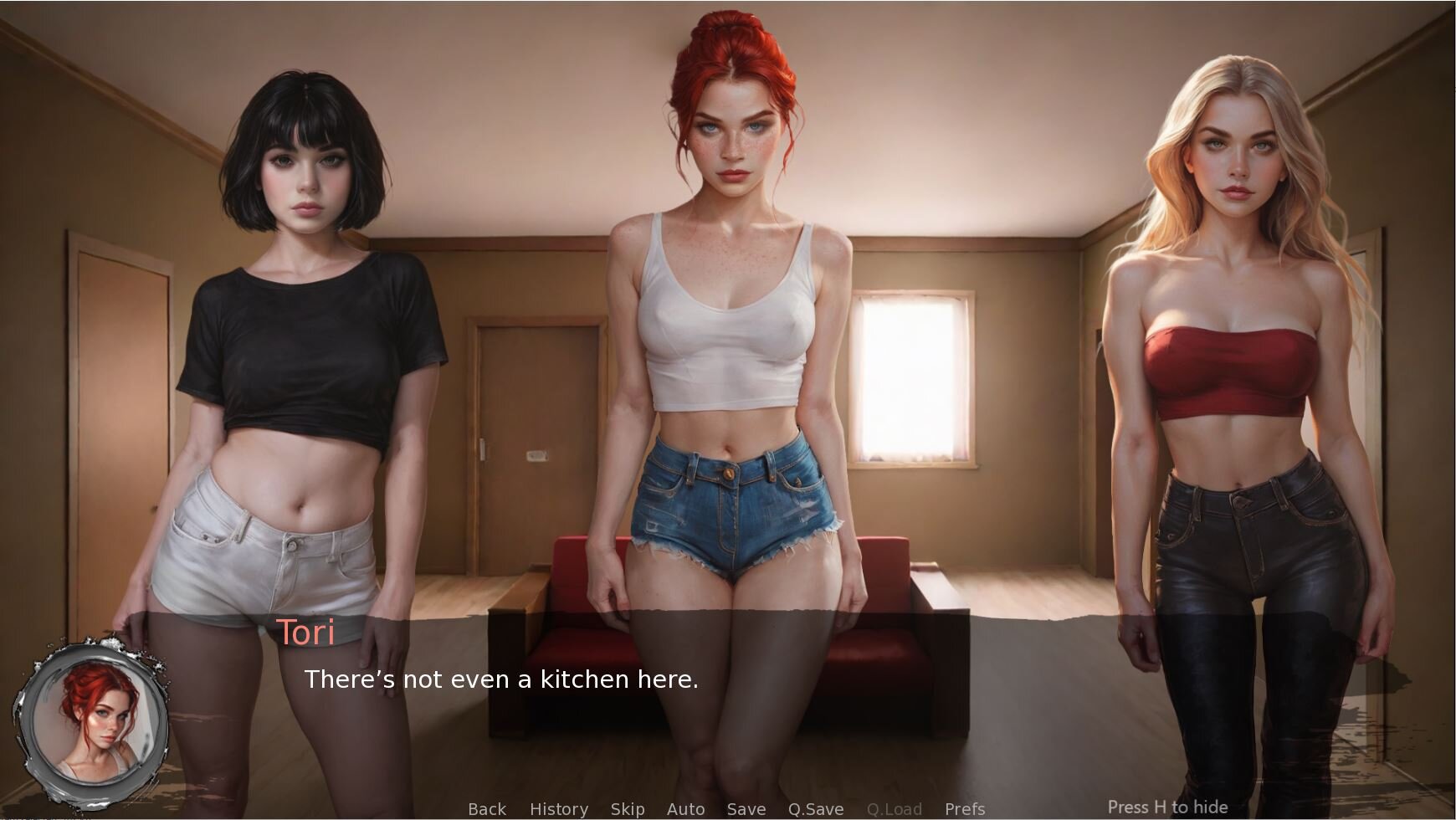
Three and One: The Cursed Mansion places you in a tense, character-driven evening where a routine favor becomes the opening to a layered mystery. In this narrative-focused installment the protagonist agrees to help a cousin when his partner Bianca and her friends Tori and Zoe experience car trouble on the way to an out-of-town DJ event; you drive them to the festival, spend the day at the event and then deal with the consequences of an overnight stay at a nearby hotel. Three and One: The Cursed Mansion emphasizes interpersonal dynamics, moral choices and atmospheric storytelling rather than fast-action sequences, and it aims to draw players into a single memorable chapter that sets the tone for the larger story.
Key Features
The game introduces a tight opening scenario that balances dialogue-driven scenes, environmental exploration and decision points that influence immediate relationships and future narrative beats. Players can expect branching dialogue options, context-sensitive interactions with objects and locations, and scenes that change based on earlier choices. The experience unfolds through focused chapters centered on conversational tension, character reactions and the slow accumulation of unsettling clues. The current release presents this opening chapter with multiple outcome paths, encouraging players to replay to discover alternate interactions and emotional beats.
Gameplay and Controls
Gameplay in Three and One: The Cursed Mansion relies on choice-based mechanics and light exploration. Interaction is handled through simple touch controls: tap to advance text, tap on dialogue options to select responses, and swipe to review the scene log. Contextual prompts highlight interactive elements in the environment so you can examine items or initiate private conversations. A pacing control lets you adjust text speed, and dialogue skip and auto-play options are available for accessibility or repeat playthroughs. Choices affect immediate scene reactions and carry subtle flags that shape later encounters rather than presenting obvious stat bars, emphasizing narrative consequence over mechanical complexity.
Progression and Structure
The game is structured as discrete chapters that introduce characters, escalate tension and reveal new clues. Progression is driven by narrative milestones: completing key conversations, resolving situational dilemmas and uncovering environmental hints. Each milestone unlocks the next scene and may open alternative paths, creating a modest but meaningful branching structure rather than an open-world system. Save slots and chapter bookmarks make it easy to revisit specific decisions. This structure supports both focused single-session play and longer explorations, as scenes are compact enough to enjoy in short bursts while still offering payoff when played consecutively.
Visual Style and Audio
The visual presentation leans on moody, hand-crafted illustrations and cinematic paneling to establish atmosphere. Lighting, color palettes and close-up character portraits are used to convey emotional nuance during conversations, while environmental art captures the festival, the roadside setting and the hotel interiors with an eye for contrast between public energy and private tension. The audio design complements the visuals with a curated soundtrack, ambient event noise and reactive sound cues that highlight important moments. These elements combine to create an immersive mood without relying on flashy effects, supporting the story-first design.
Customization, Replay Value and Accessibility
Customization in Three and One is focused on tailoring the reading and interaction experience rather than altering character models: adjustable text size, contrast modes and control sensitivity let players shape interface behavior to their needs. Replay value comes from branching dialogue, alternate scene outcomes and subtle changes to character responses that become apparent on subsequent runs. Accessibility options include adjustable text pacing, clear visual indicators for interactive elements and support for playing the full narrative offline after download. The design avoids timed decisions for core story beats, favoring thoughtful choices, while optional tension-based prompts provide a modest challenge for players who want higher-stakes moments.
User Experience and Device Compatibility
The interface is optimized for touch screens with straightforward menus and a responsive layout that adapts across phone and tablet sizes. An internal scene log and a replay menu keep track of past choices so players can review conversations and jump to unlocked chapters without redoing the entire session. Performance is tuned to run smoothly on a range of devices, offering a stable offline experience once the game is installed. Controls are intentionally simple to lower the barrier to entry while preserving the narrative depth for players who enjoy character interaction and story exploration.
Version 0.27 Notes
Version 0.27 of Three and One: The Cursed Mansion refreshes the opening scenario and refines several dialogue branches to better reflect character intent and consequence. This update polishes pacing, improves visual transitions between scenes and adds clarity to interactive prompts so players can more easily discover alternate paths. The release focuses on making the opening chapter a stronger hook for the rest of the story while preserving the game’s emphasis on interpersonal tension and atmospheric storytelling.