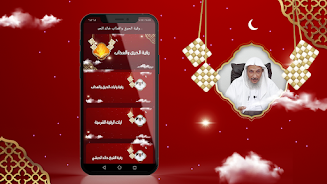
رقية الحرق والعذاب is an offline Sharia ruqyah application that collects recorded recitations by Sheikh Khaled Al-Habashi, focused on texts related to burning and torment themes used in traditional spiritual healing. The app allows you to play all included tracks without an internet connection, pick up playback from the exact point where you stopped, and continue listening in the background while you use other apps or take calls. Designed for straightforward, private listening, رقية الحرق والعذاب aims to make these specific recitations available on demand for users who prefer a simple interface and reliable offline access.
Key Features
The core features of رقية الحرق والعذاب emphasize uninterrupted, local playback and ease of use. All recitation files are pre-packaged for offline listening so there is no need to stream. Sessions resume from the last saved position automatically, which is helpful if you listen in short sittings or are interrupted by calls. Background audio is supported and will pause for incoming phone calls then continue once the call ends. The app also supports straightforward sharing of files or references so users can pass specific recordings to family or community members. Controls are intentionally minimal to reduce friction during listening.
Playback and Controls
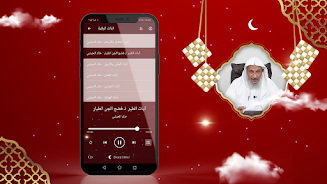
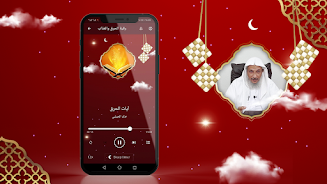
Playback controls are built around familiar actions: play, pause, skip to the next or previous track, and seek within the current recitation. A visible track list and clear track titles let you select individual recordings or play them in sequence. The resume-on-start behavior acts like a simple bookmark for the current recording so you can return to longer sessions without losing your place. The app is optimized to maintain playback when the device is locked and to behave predictably when interrupts such as calls occur.
Structure, Progression and Replay Value
The content is arranged as a collection of discrete recordings rather than a continuous stream, so progression depends on how you choose to listen — either in order or by selecting individual pieces. Recordings are grouped by theme and length to help you structure listening sessions, and repeated listening is supported by the automatic resume feature and the ability to replay any track multiple times. This structure supports both short, focused sessions and longer, consecutive listening periods, enhancing the app's replay value for study or regular devotional practice.
Visual Style and Accessibility
The visual design favors a clean, uncluttered layout with readable Arabic labels and straightforward icons so users of varying ages and technical comfort can navigate easily. Large controls and a simple track list minimize accidental taps and reduce cognitive load. Because the app is intended for quiet, private listening, the interface avoids unnecessary elements and focuses on the essentials: selection, playback and position memory. These choices improve accessibility for users with limited mobile experience and for those who prefer a minimal UI.
Privacy and Offline Use
Because رقية الحرق والعذاب is usable entirely offline, it supports private listening without the need for continuous network access, which can be important for users in areas with limited connectivity or those who prefer not to stream sensitive material. Offline storage also means predictable performance and lower data usage. The app’s background playback and resume features are designed to respect normal phone behavior so you can maintain privacy and convenience during everyday use.
Limitations
Users should note the focused scope of رقية الحرق والعذاب: it contains a curated selection of recitations centered on specific themes and does not aim to be a comprehensive library of all ruqyah types. There are no online multiplayer, ranking, or streaming features; the experience is intentionally local and single-user. Some users may find in-app prompts for ratings or sharing requests intrusive, and the content set is limited to the included recordings rather than an expandable online catalog. These trade-offs reflect a deliberate emphasis on simplicity, offline reliability, and private listening rather than an extensive feature set.