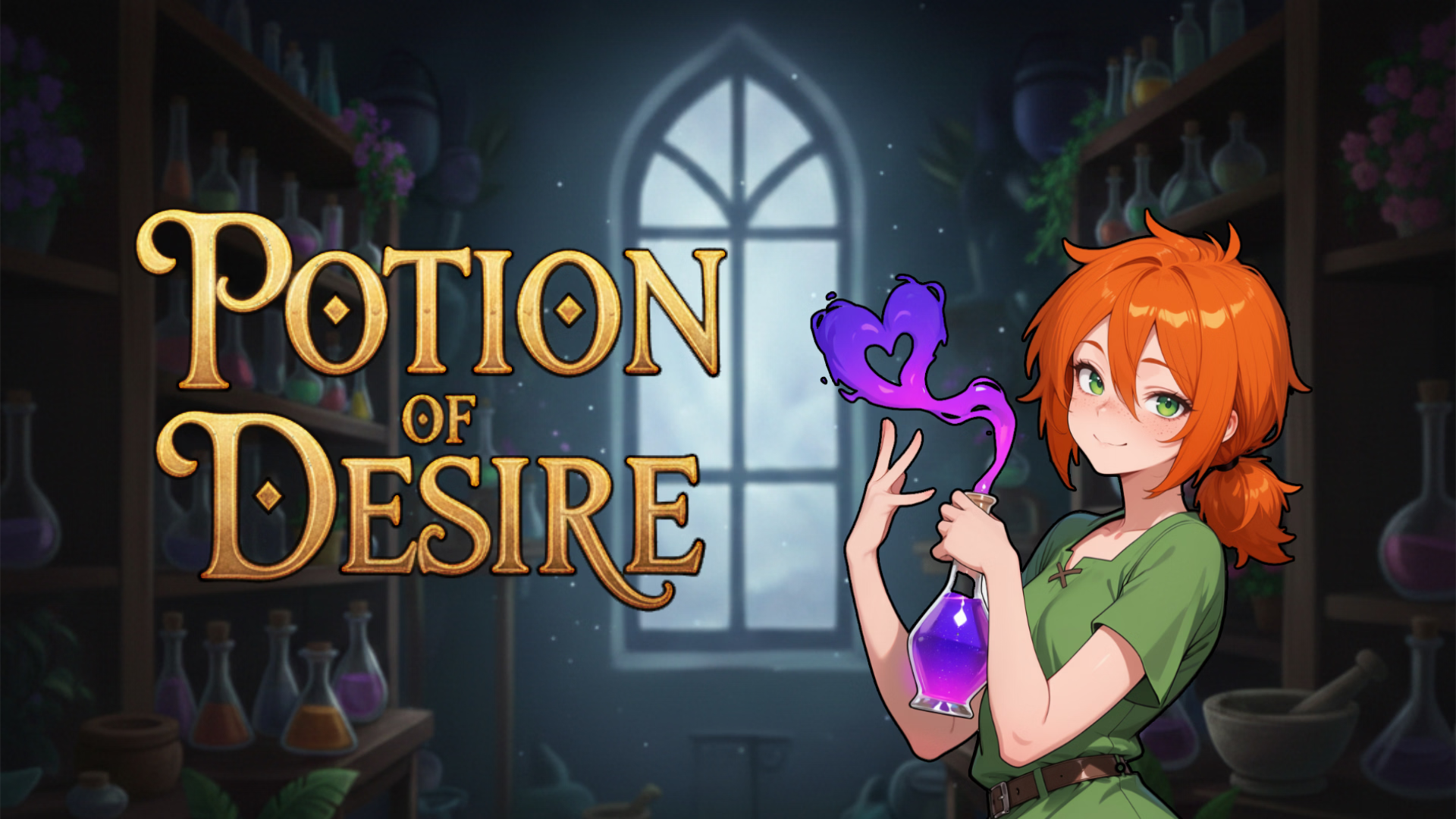
Potion of Desire casts you as Elara, an impoverished alchemist who arrives in the fogbound city of Port Nocturne with only thirty in-game days to synthesize the Grand Panacea and save her mother. The game blends a character-driven narrative with resource-driven decision making: you research rare ingredients, experiment under pressure, and weigh moral compromises as the clock ticks. Choices about guild rules, alliances with figures such as Justiciar Kaelen, or dealings with the Velvet Syndicate steer the story and influence how Elara’s skills, reputation, and inner conflict evolve over multiple playthroughs.
Key Features
Potion of Desire offers a branching narrative where decisions carry durable consequences, a focused 30-day campaign that emphasizes time management, and an alchemy system built around experimentation rather than rote recipes. NPC relationships affect access to ingredients and unique story beats, while exploring Port Nocturne opens new locations and risky opportunities. The core loop centers on researching, synthesizing, and learning from failure: each misstep can cost days or valuable components, so planning and adaptive strategies reward careful players.
Gameplay & Controls
Gameplay revolves around an intuitive touch interface suitable for phones and tablets: tap menus to travel between locations, drag-and-drop or tap-to-combine ingredients in the lab, and select dialog choices to influence relationships and reputation. Crafting sessions present a series of interactions — balancing temperature, catalysts, and order of addition — that are resolved through in-game mechanics rather than random chance alone. Time advances when you perform research, experiment, or explore, so each lab action has an opportunity cost and forces meaningful prioritization within the 30-day limit.
Progression & Customization
Progression is shaped by a research tree and reputation meters that unlock new recipes, laboratory procedures, and contacts. Investing time into study yields permanent knowledge while successful trades or favors improve standing with guilds or the underworld, changing which suppliers and experiments are available. Your laboratory can be improved through upgrades that shorten synthesis times or reduce the likelihood of harmful outcomes, and the player’s approach to moral choices steers access to alternate resources and story branches rather than relying on a single optimal path.
Visual Style & Sound
The game adopts a moody, hand-painted visual style that emphasizes Port Nocturne’s narrow alleys, vaulted guild halls, and shadowed bazaars. Animations are deliberate and support readability during crafting sequences, while user interface elements are designed to present complex information clearly on small screens. An atmospheric soundtrack and ambient sound design deepen immersion without overwhelming text or menu interactions, helping players focus on puzzle-like laboratory sessions and tense narrative moments.
Replay Value & Challenge Systems
Replayability is a central design goal: branching outcomes, reputation consequences, and unlockable recipes encourage multiple runs to see alternate endings and to master tougher alchemical challenges. Players can adopt varied strategies — methodical researcher, politically savvy negotiator, or risk-taking outsider — each of which alters pacing and available tools. Difficulty and pacing options allow a relaxed experience for casual play or a tighter, higher-stakes mode that amplifies the pressure of the 30-day campaign for players seeking a strategic test.
Accessibility & Offline Play
The user experience includes accessibility options such as adjustable text size, toggleable hints that explain crafting mechanics, and color-adjustment presets to assist colorblind users. Autosave and manual save slots protect progress during long campaigns, and the game supports full offline play after installation so you can manage Elara’s days without a constant network connection; periodic updates and optional online features are limited to content patches and do not affect single-player progression.
Whether you prefer careful experimentation, tense time-management, or morally ambiguous storytelling, Potion of Desire places alchemy and consequence at the center of the experience. The pacing of the 30-day campaign, the depth of laboratory mechanics, and the social choices in Port Nocturne combine to create a thoughtful RPG that rewards planning, curiosity, and replay.