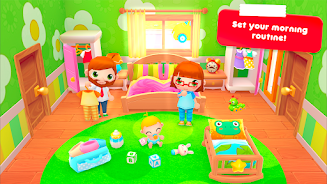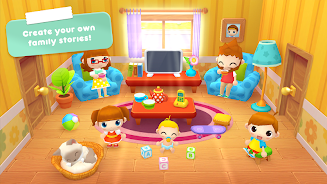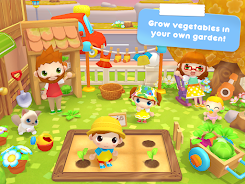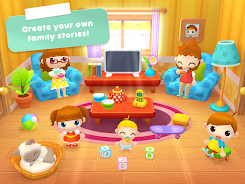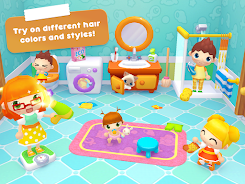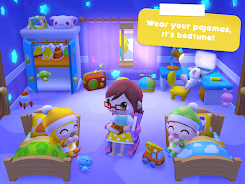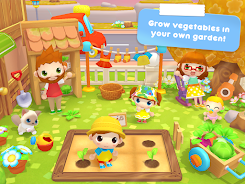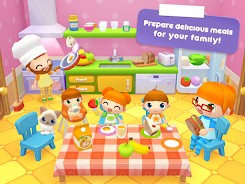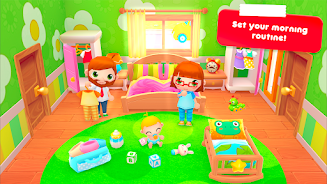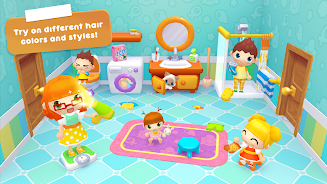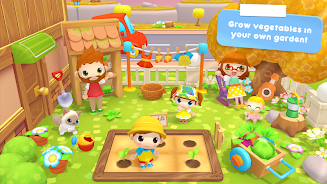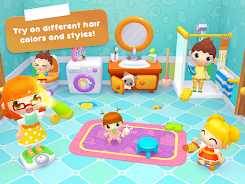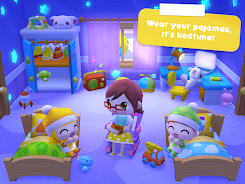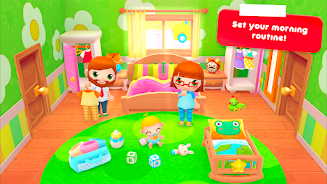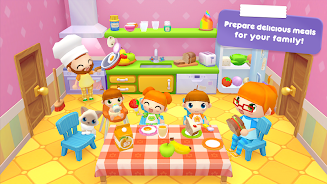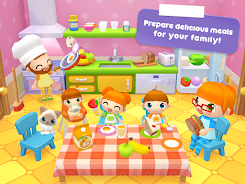
Sweet Home: Games for kids is a calm, child-focused dollhouse experience designed for ages 2–6 that encourages gentle pretend-play and storytelling. In this single-player app children move from room to room, switch between day and night, and engage in everyday routines such as cooking, bathing, tidying and bedtime preparation. The interface is intentionally simple and private: after installation Sweet Home: Games for kids runs offline and provides optional one-time purchases to expand the household without recurring fees, which many parents find convenient for travel and low-connectivity situations.
Gameplay and mechanics
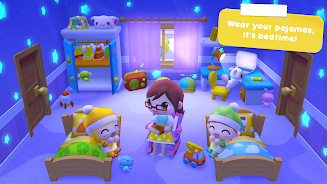
The core gameplay centers on open-ended exploration rather than levels or scores. Each room is a self-contained scene with interactive objects and clear cause-and-effect responses: tap a pot to pretend-cook, move a toy to tidy up, or change the lighting to move from playtime to bedtime. A day/night toggle changes which activities are available and encourages sequence-based play (for example, preparing a snack in the afternoon and following a calming routine at night). Activities are designed to be short and repeatable so children can invent stories and practice caregiving behaviors at their own pace.
Controls and user experience
Controls are tailored for very young players with large touch targets, simple icons, and minimal text. Interactions rely on tapping and light dragging gestures so toddlers can act independently while slightly older children can explore more detailed sequences. Visual cues and gentle audio feedback guide players toward interactive elements without the need for written instructions. The app avoids timers, scores and pressure-based mechanics, focusing instead on relaxed, exploratory play that supports narrative development and emotional learning.
Progression and expansion
Progression is non-linear: children expand their play by discovering new interactions within each room rather than completing levels. Additional rooms and story activities are available as optional one-time purchases that permanently add content to the household, allowing families to tailor the experience while avoiding subscriptions. New rooms introduce fresh everyday scenarios and tools, which broaden possibilities for pretend-play and provide natural incentives to return to the app.
Customization and content variety
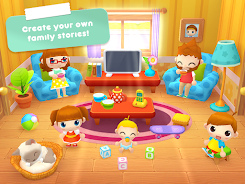
The household cast is intentionally focused and manageable: the game includes six family members plus a pet, which keeps the play environment familiar and easy to navigate for young children. Within that cast, small customization options—such as simple outfit changes and the ability to arrange basic room elements—let users personalize scenes without overwhelming choices. This limited variety supports continuity in storytelling while still offering enough variation to sustain repeated sessions.
Visual style and audio design
Visually, the app favors a cozy, hand-drawn aesthetic with soft colors and warm lighting that create a calming atmosphere. Illustrations are clear and age-appropriate, helping children recognize everyday objects and actions. Audio design emphasizes gentle sounds and subtle voice cues that scaffold activities and encourage imaginative narration without excessive stimulation. These design choices work together to create a soothing environment suitable for quiet play sessions and bedtime routines.
Level structure and replay value
Rooms function like mini-scenes rather than traditional levels: each scene contains multiple interactive elements and short sequences that can be revisited in different combinations. Replay value comes from open-ended storytelling, the day/night cycle that alters available actions, and the incremental expansion of the household through optional purchases. Because the app does not impose right-or-wrong solutions, children are free to invent scenarios, which supports creativity and prolonged engagement across repeated uses.
Accessibility, privacy and offline play
Sweet Home: Games for kids emphasizes accessibility with large icons, limited text, and predictable interactions that suit emerging motor and language skills. The app contains no chat features or online social interactions; all play is local and private once installed. Offline play and the absence of real-time networking reduce data use and improve reliability on the go, making the app a practical choice for caregivers who want a secure, low-distraction experience for young children.
Audience and recognition
Intended for preschoolers and early learners, this title supports imaginative play, empathy and routine-building through everyday household scenarios. As part of the Stories Junior collection, Sweet Home: Games for kids reflects a design approach used by families worldwide and builds on many years of calm, child-centered development. The app is well-suited for parents, daycare providers and educators seeking a private, offline-friendly digital toy that complements hands-on play and storytelling.