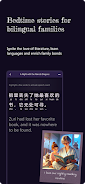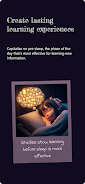
Cuddlebook is a focused library of short bedtime stories designed to help parents share vocabulary and gentle language practice with young children during pre-sleep routines. The app gathers simple, repeatable narratives in multiple languages so caregivers can read in their native tongue or introduce a second language naturally while keeping reading calm, comforting, and predictable for the whole family.
Key Features
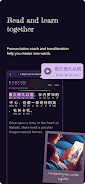
Cuddlebook offers a curated collection of stories that emphasize repetitive phrasing and age‑appropriate vocabulary to support early language acquisition. Each story is written to be short and easy to follow at bedtime, and translations are available for Cantonese, French, Mandarin, Spanish, and Vietnamese. Tap and highlight controls let a reader touch individual words to hear correct pronunciation, which reinforces sound recognition and helps caregivers model pronunciation for young listeners.
How the app works
The app uses simple tap controls so parents or children can highlight words on the page and play pronunciation audio on demand. Pages advance with a swipe or a tap, and readers can pause on any sentence to repeat pronunciation or practice new words. Text highlighting follows the spoken audio to make the connection between written form and sound. Stories are organized by age range and theme so readers can select calming content appropriate for different stages of early development.
Progression, customization, and replay value
Rather than competitive progression, Cuddlebook encourages steady routine and repeated exposure, which is the most effective path for early vocabulary growth. Parents can mark favorites, return to particularly helpful stories, and build a nightly rotation to reinforce target words. Customization options such as adjustable text size, narration speed, and a simple dark night mode help tailor the reading experience to a child’s attention and comfort. These small choices increase replay value because the same story can be used for different learning goals and bedtime moods.
Visual style and user experience
The visual design favors gentle illustrations, uncluttered pages, and a calm color palette to reduce stimulation before sleep. Typography is selected for legibility at small sizes and for clear letter shapes to support early readers. Navigation is intentionally minimal so families can focus on reading rather than technical controls: a clear home screen, straightforward story selection, and in‑page gestures keep the experience smooth for both tech‑savvy and occasional users.
Controls, accessibility, and offline use
Controls are designed to be intuitive for parents and older siblings, with touch interactions that are easy for small hands if a child wants to explore words independently. Accessibility settings include adjustable font size, audio volume controls, and a consistent read‑aloud timing option to accommodate different listening needs. Stories can be downloaded for offline use so the app remains useful in low connectivity situations such as car rides or while traveling. Local bookmarks and saved progress are stored on the device, allowing families to keep a private record of what they read without requiring an account.
Practical limitations and intended use
The app is specialized for bedtime shared reading and early vocabulary practice rather than broad curricular instruction. Translations are currently limited to Cantonese, French, Mandarin, Spanish, and Vietnamese, so other language options are not yet available. The most effective use requires interaction: tapping words to hear pronunciation and repeating aloud with the child supports retention more than passive playback alone. Cuddlebook is designed to be a supportive tool for nightly routines, not a replacement for direct caregiver attention and conversation.
Getting started
Begin by choosing a short story and adjusting text size and audio speed to comfort levels that work for your child. Use the tap and highlight feature to introduce one or two new words per session and repeat them across several nights to build familiarity. Over time families often find that the ritual itself becomes the key learning mechanism, turning calm pre‑sleep moments into consistent opportunities for language practice and bonding.